
Sandstorm-style Poisoning Targeting Developer Tool Supply Chains——Sample, Technical, and Tactical Analysis of TeamPCP Organization (Part 1)
Abstract
TeamPCP is an emerging attack organization that has been extremely active in recent years (active at the end of 2025) and has attracted rapid attention. It focuses on the development ecosystem of GitHub Actions, npm, CI/CD Pipeline and cloud development environment, and carries out systematic and large-scale invasion and poisoning activities, so that every point it breaks through may quickly spread downstream according to distribution and call, thus forming a threat cascade that continues to spread. The stolen information assets focus on various types of credential information such as GitHub, various cloud services and authenticated Token, Service Account, API Key, etc. It is a threat act focusing on Token credential acquisition. In the traditional portrait of attack mode, targeted, long-term and covert attack mode is usually adopted for software supply chain attacks, while TeamPCP organizations do the opposite, constructing a brand-new “sandstorm” attack paradigm, comprehensively covering attacks, and trying to enter more “cracks” through batch poisoning to obtain black profits in batches. It does not care about the hidden life cycle of any breakthrough point, and even carries out high-profile open source, reward and other operations to maximize the expansion of the work surface and build traceability interference items. The scenario condition of this mode of operation is that the exposure of the AI era is expanding rapidly, and the global developer ecosystem’s trusted upstream and downstream division of labor and efficient links combined with collaboration have become the collective “mental defect” of the global IT system “. TeamPCP attack activities have also been more AI-enabled, including based on AI-assisted malware writing, its overall attack strategy, anti-traceability and interference item construction, etc., are also clearly based on the AI of a comprehensive combing guidance. TeamPCP is not just an attack team, it can cooperate with blackmail organizations and other black and gray production groups by transforming its attack capability into a dynamic Token credential resource pool, thus turning itself into a black and gray production upstream “ecology”. When an attack builds an incremental revenue cycle with strong demonstration, it enters an accelerated movement, which is a new paradigm-level threat challenge after RaaS and FaaS.
The recent typical attack activity of TeamPCP organization is that on May 12, 2026, the Mini Shai Hulud open source software supply chain poisoning attack broke out, which spread to several well-known software projects by polluting more than 2100 software packages. The day after the attack broke out, TeamPCP disclosed the complete source code and instructions of the worm in GitHub. Since then, related attacks have continued to ferment. On May 18, the automatic attack code-named “Megalodon Shark (megalodon)” launched 5718 malware implants on 5561 GitHub projects within 6 hours. On May 19, the malware variant continued to pollute 643 software packages. On May 21, it was confirmed that the malicious attack module carried by another worm came from the same group as this attack.
The relevant attacks and samples are translated as “Sandworm”(沙虫) in China, but since “Sandworm” has been used as a common name label for other attack organizations in the industry’s historical threat analysis, including the Anity threat intelligence system, we have used the term “Sandstorm” to avoid confusion and public interference with the attribution issue.
Anity CERT started from the above-mentioned attacks and conducted a targeted analysis based on two long reports.
■ Sandstorm-style Poisoning Targeting Developer Tool Supply Chains (Part 1)
Anity selected five typical samples from thousands of TeamPCP tissue-related samples and conducted a comprehensive analysis with the assistance of Anity AVL Code AI. These five samples cover the organization’s attacks in all aspects of software package poisoning, load delivery, self-diffusion, credential theft, etc. The system restores its complete link from leaking worm source code, public reward incentives to implementing large-scale automated attacks. The full text focuses on the organization’s threat portrait, sample analysis, core attack characteristics, traces of malicious code AI generation, and multi-dimensional geographical and cultural clues to reveal its contradictory characteristics and the design logic of traceability interference.
This report is aimed at government and enterprise operation and maintenance personnel, network security operators, IT product developers, and security regulatory agencies. It focuses on basic core information such as attack organization background, attack characteristics, typical sample analysis, traceability clue research and judgment, covering attack situation and attack technical evidence. It is applicable to security notification, risk self-examination and situation report, and helps relevant units to quickly grasp the overall threat picture and implement basic prevention and control.
■ The Collapse of Sand Dunes in the AI Era: Supply Chain Security Challenges Under the TeamPCP Attack Model (Preview)
For software development, operation and maintenance, and personnel in the field of software and AI. Focus on the combination of supply chain scenarios of technical research and strategic defense thinking, multi-dimensional catalytic threat causes, supply chain attack evolution trends and scenario-based defense solutions. Focus on mechanism digging, cause dismantling and high-level defense system construction, showing the understanding of the entire supply chain attack link in the era of AI.
If readers are concerned about the details not covered in this report, Anity CERT will issue a separate supplementary report.
1.TeamPCP Organizational Structure and Basic Profile
1.1 Naming of the TeamPCP Organization
TeamPCP (also known as DeadCatx3, PCPcat, PersyPCP, ShellForce and UNC6780) have been active since the second half of 2025. They focus on the implementation of high-risk cyber criminal organizations such as software supply chain poisoning, CI/CD assembly line penetration, open source ecological pollution and credential theft. They mainly launch large-scale attacks on the global developer infrastructure. Microsoft, Google and other manufacturers unify their tracking numbers into UNC6780.
TeamPCP is the self-title of the organization. The Telegram channel name of the organization is @team_pcp (founded in November 2025, and its early channel name is @Persy_PCP). Its speeches in the channel include “you may already know us as TeamPCP or Shellforce… CipherForce is a new project” and other contents. It posts in BreachForums forums and signs TeamPCP [Co-Owner], many of its samples also have the “TeamPCP Cloud stealer” string.
Its organization, actions, and tool history are shown in the table below.
| Code name | Code Type | Naming Meaning Analysis | Core Usage Scenarios |
| TeamPCP | Organization owner self-proclaimed/social platform code | PCP implies mass poisoning and large-scale pollution of the software supply chain for the attacker circle; Team works together on behalf of the gang. | External core identity, used for public activities such as GitHub, attacker forum, reward challenge, etc. |
| PCPcat | Early Attack Code | PCP binding organization identification, cat (cat) is a commonly used hidden nickname for the attacker circle. | December 2025 R eact2Shell large-scale npm supply chain poisoning operation exclusive code |
| DeadCatx3 | Tool/source code | DeadCat (dead cat) fits the dark attack style, x3 represents the third generation tool variant | GitHub account ID used to publish the source code of the Mini ShaiHulud worm and attack tool.‑ |
| PersyPCP | Early Social Platform Code | Persy is taken from Perseverance, implying continuous penetration and stubbornly latent. Suffix binding PCP main logo | Telegram social accounts, release attack notice, reward announcement, threat intelligence |
| ShellForce | ransomware attack codename | Shell (system backdoor/command line), Force (violent intrusion), highlighting the intrusion and deterrence properties | Use of data leakage and blackmail attack scenarios |
| UNC6780 | Tracing number of two manufacturers | UNC is the exclusive number of non-national background cyber criminal organizations in Microsoft’s threat intelligence system, and the 6780 is to assign ID. | Internal traceability and report labeling of security vendors such as Microsoft and Google |
1.2 Characteristics of the organization’s core attack
Based on the captured attack samples, public attack events, and security intelligence analysis, the TeamPCP is different from traditional cyber attack groups and has distinctive new supply chain attack characteristics. The core characteristics are summarized in the following table.
| Core Features | Popular Interpretation |
| Specializing in Software Supply Chain | Don’t carry out phishing attacks on conventional terminals and employees, focus on development core facilities such as GitHub, npm, PyPI, CI/CD pipeline, etc., and break a single point can affect a large number of downstream projects. |
| To steal high-authority credentials as the core | Focus on stealing permission credentials such as GitHub identity tokens, cloud platform keys, and API keys. The permission level of such credentials is much higher than that of ordinary account passwords. |
| Deeply leverage CI/CD to automate processes | Hijacking code automatically builds and publishes pipelines to realize automatic implantation and distribution of malicious code, and the attack spread very fast. |
| Fast forward and fast out attack mode | After obtaining the target permission, quickly steal credentials, spread malware and evacuate, adapt to the short-term characteristics of cloud platform tokens, and avoid traceability. |
| attack capability open diffusion | Proactively open the complete source code of the worm and launch a reward contest to encourage anonymous attackers around the world to cooperate and expand the scope of the attack. |
| Attack revenue model diversification | Not only independently launched attacks for profit, but also resold stolen cloud and warehouse permissions to the black market, forming a closed loop of revenue. |
| Focus on AI-related development ecology | Priority attack AI frameworks, large language model agents, Python class AI dependency packages, AI plug-ins and other emerging development components. |
1.3 Key Attack Incidents and Sample Size
Since TeamPCP became active at the end of 2025, it has launched more than 20 large-scale and cross-ecological supply chain attacks. Malicious activities cover mainstream development infrastructure such as npm, PyPI, GitHub Actions, VSCode extension, CI/CD pipeline, etc., polluting more than 500 open source software packages and tool components, with the overall number of malicious samples reaching hundreds to thousands. Among them, the most influential Mini Shai-Hulud worm attack pollutes 323 independent software packages and generates 639 malicious versions in a single round, forming a large-scale proliferation situation in a short period of time and posing a continuous threat to the global open source ecology.
The organization’s landmark attacks showed a clear path of tactical evolution: early on, it focused on targeted poisoning of a single development tool, and gradually upgraded to a high-level mode of open weaponization, reward incentives, and automated batch attacks. Typical events include: successful intrusion into Trivy security tool release process, code poisoning and key theft by tampering with CI/CD pipeline; LiteLLM component pollution for AI development ecology, focusing on stealing cloud platform API keys and container environment credentials; Break through the TanStack project protection system and break through the SLSA Build Level 3 supply chain security trust model for the first time in real attack scenarios; Actively disclose the complete source code and instructions of ShaiHulud worms, lower the threshold of attack and promote the spread of threat capabilities; Jointly with the BreachForums Attacker Forum to launch a reward and sabotage competition to attract global attackers to participate with high incentives; Launch an automated attack with code Megalodon to push malicious submissions to thousands of GitHub warehouses in batches in a short period of time to achieve non-differentiated supply chain pollution. On the whole, TeamPCP attacks have the characteristics of high frequency, scale, openness and automation, and have formed a complete closed-loop and diffusion system of attacks.‑
1.4 AI-aided generation of attack payloads
According to the thousands of Shai-Hulud series worm samples released TeamPCP, the security intelligence verification shows that the malicious script has AI auxiliary generation traces, but the core attack logic is designed and implemented manually.
From the sample details, the early Bash script of the worm contains a large number of AI generation features, such as redundant comments, emoticons, formatted text, etc. Security vendors determine with medium confidence that this part of the content is generated with the assistance of the large language model (LLM). However, the core functional modules such as attack chain design, credential theft logic, CI/CD vulnerability exploitation, worm propagation strategy, etc. are all manually customized and developed by attackers.
After the worm source code was made public, global attackers derived a large number of variant samples based on the secondary modification of the original code. Such derived samples do not belong to the scope of TeamPCP native development.
2.Core Attack Incidents and Tactical Evolution of TeamPCP
2.1 The Rise and Evolution of TeamPCP
To understand the geopolitical implications of TeamPCP action, we must first grasp the path of its technological evolution. The group’s attacks are not isolated incidents, but a chain of incremental escalation that extends from September 2025 to May 2026. This chapter analyzes the rise of TeamPCP, key turning points, and the two waves of Mini Shai-Hulud and Megalodon coordinated attacks under a unified framework.
TeamPCP has been active since the second half of 2025, with early activity dominated by supply chain attacks targeting the CI/CD pipeline and the npm ecosystem, but the real global concern is the React2Shell large-scale action in December 2025.
| Time | Incident | Impact scale |
| 2025-09-08 | Chalk/Debug Cryptojacking Attacks | 18+ packs, 2 billion+ weeks downloads |
| 2025-09-14 | Shai-Hulud worm first appeared | 517+ package |
| 2025-11-24 | “Second Coming” Fake Bun Runtime | 1,100+ packs |
| 2026-03-19 | Trivy Scanner Supply Chain Break | Almost all versions are contaminated |
| 2026-05-11 | Mini Shai-Hulud / TanStack | 408+ package, first cross-PyPI |
| 2026-05-12 | Shai-Hulud Open Source (MIT License) | Capacity diffusion milestone |
| 2026-05-12 | BreachForums reward $1,000 | Encourage third-party use |
| 2026-05-18 | Megalodon action | 5,561 Warehouse Backdoor |
| 2026-05-19 | Mini Shai-Hulud / AntV (atool) | 643 version, 323 package |
| 2026-05-19 | durabletask PyPI Worm | Rope/Koschei load |
| 2026-05-20 | Web3/DeFi MCP Fishing | 10 packs |
| 2026-05-21 | Polymarket wallet theft | 9 packages |
The key turning point will occur on May 12, 2026. TeamPCP made the complete source code of the Shai-Hulud worm publicly available under the MIT license on GitHub and launched a $1,000 “destruction contest” in BreachForums “. This behavior has implications on multiple levels:
Low cost of attack threshold: open source code and use documents reduce the technical threshold;
Traceable interference: A large number of attackers enter the site, making it difficult to distinguish between the original attacker and the imitator.
2.2 Mini Shai-Hulud: The “Breakpoint” of the Supply Chain
On May 11, 2026, the TeamPCP organization uploaded 84 malicious code packages to the npm package warehouse within 6 minutes, targeting 42 toolkits owned by the well-known open source project TanStack. The attacker hijacked the TanStack’s official CI/CD pipeline, stole the GitHub platform OIDC identity token, and generated a software supply chain security certificate conforming to SLSA Build Level 3 standard, enabling the malicious package to obtain a trusted endorsement that is completely consistent with the official release. This is the first time in a public report that a supply chain poisoning incident has broken through the SLSA Build Level 3 trusted certification system in a real attack scenario.
The core technical points of this attack are as follows:
- SLSA Build Level 3 Security Mechanism
SLSA (Supply-chain Levels for Software Artifacts) is a common framework in the field of software supply chain security, and Build Level 3 is the current mainstream high-level trusted certification standard. This level requires that the software package be automatically generated by the official build tool and verified by the platform to ensure that the code package is released through a regular channel and has not been tampered.
- Attack Breakthrough Logic
This attack did not forge or tamper with the certification documents, but directly controlled the official CI/CD pipeline and the corresponding OIDC token that generated the certification, and used the hijacked legal identity to generate the compliance SLSA certification, so that the malicious package could not be identified by the traditional mechanism in the downstream verification process, realizing “legal poisoning”.
- High-risk vulnerability chain exploitation (CVE-2026-45321,CVSS 9.6)
The attack forms a high-risk vulnerability chain by combining three GitHub platform vulnerabilities. The key steps include:
pull_request_target trigger abuse: use the permission feature of the trigger to enable externally submitted code to obtain warehouse modification permission;
CI/CD cache poisoning: Injects malicious code into the pipeline build cache so that it is loaded and executed in subsequent build processes.
Stealing OIDC tokens: Stealing official identity passes directly from running processes.
2.3 Megalodon: A “Dust Storm” of Five Thousand Submissions in Six Hours
Mini Shai-Hulud attack is similar to precision guidance mode, so the Megalodon operation on May 18 is carpet bombing mode. In the six hours between 11:36 and 17:48 UTC, TeamPCP pushed 5,718 malicious commits to 5,561 different GitHub repositories. Attackers use random 8-character GitHub one-time accounts to forge automated identities such as build-bot and ci-bot, and submit information disguised as regular CI maintenance.
Megalodon payload are injected directly into GitHub Actions workflow files containing base64-encoded bash scripts specifically designed to steal CI keys, cloud credentials, SSH keys, OIDC tokens, and source code keys. Two variants are particularly dangerous: SysDiag fires on every push, and Optimize-Build uses workflow_dispatch to stay dormant. What is more noteworthy is that TeamPCP infected GitHub employee equipment through the poisoned Nx Console VS Code extension, resulting in the exfiltrate of about 3,800 GitHub internal warehouses, which were subsequently sold for $50,000.
| Characteristics | SysDiag | Optimize-Build |
| Trigger condition | push (all branches) pull_request_target | workflow_dispatch (trigger on demand) |
| Effect | Automatic per push/PR | Attackers can trigger on demand via GitHub API |
| Goal | Large-scale, wide-spread net | Directed Persistence Backdoor |
| permission request | id-token: write, actions: read | As above |
2.4 The Coordination Logic of Two Waves of Attacks
Mini Shai-Hulud and Megalodon are not two independent actions, but a coordinated attack on two different levels of the AI developer supply chain. The first wave attacks the package registry (npm/PyPI) and implants malware during the dependency installation phase. The second wave attacks the CI/CD infrastructure (GitHub Actions) and steals keys during the build execution phase. Together, they cover the complete software delivery lifecycle from dependency installation to workflow execution, and both have persistent hooks installed in AI coding tools, including Claude Code and VS Code.
CSA research points out that this layered attack mode shows that attackers have a deep understanding of the AI developer ecology-AI frameworks, model integration libraries and development tools occupy a unique and privileged position in modern software production, with access to source code and keys during the development phase and direct deployment of their output to AI-enabled production systems. By gaining a foothold at this layer, the attacker gains both instant credential access and persistent foothold to the next generation of deployments.
3.Attack Techniques and Attack Analysis Corresponding to the Sample
The five samples for this analysis are representative of the thousands of samples captured by Anity from the TeamPCP series of attacks, covering typical payload types at different stages in the attack chain. The analysis part is based on the analysis results of Anity AVLCode.
Table 3-1 Sample Selection Description and Overview
| MD5 | Type | File size | Attack Chain Role | Corresponding Attack Wave |
| and… | PythonZIP | 28KB | Credential Aggregation Trojan (stage-2) | durabletaskPyPI Worm |
| C5324C4ADA09288ECEBC42CFC9DB8A3F… | npm package | 22MB | Supply Chain Infection Load | MiniShai-HuludAntV wave |
| C56E59EE44BF0D606353BDCED380166B… | JS/TS | 5.4MB | Self-replicating worm | MiniShai-HuludTanStack wave |
| C1D01AC7A9FBEBDF96C8F3023E6EC877… | – | 25KB | Cloudware Variants | TeamPCP common tool set |
| ED9E80087326C349FBB90F2E90C5A691… | – | 25KB | Cloudware variant | TeamPCP Universal Toolkit |
3.1 Rope/Koschei—Credential-Stealing Trojan
Table 3-2 Counterfeit PyPI Package Sample Information Label
| Virus name | Trojan/Python.ShaiHuludSupplyChain |
| Original file name | managed.pyz |
| MD5 | 04750ABA368EEB2890E74D10FA0A50A3 |
| File size | 28.03KB (28,703 bytes) |
| File format | ZIP |
| CVERC Collaborative Analysis Results | 6 / 14 |
Note: The malicious sample detection results in this report are derived from the National Computer Virus Collaborative Analysis Platform operated by the National Computer Virus Emergency Response Center (CVERC), which is an authoritative national malicious sample detection infrastructure in China, and the test results have official verification effect.
The sample is a packaged Python program in PYZ format. Its main function is to steal various configuration and credential information and send it back to the C2 server. Based on the Anity AVLCode AI analysis, the overall structure of the sample is as follows:
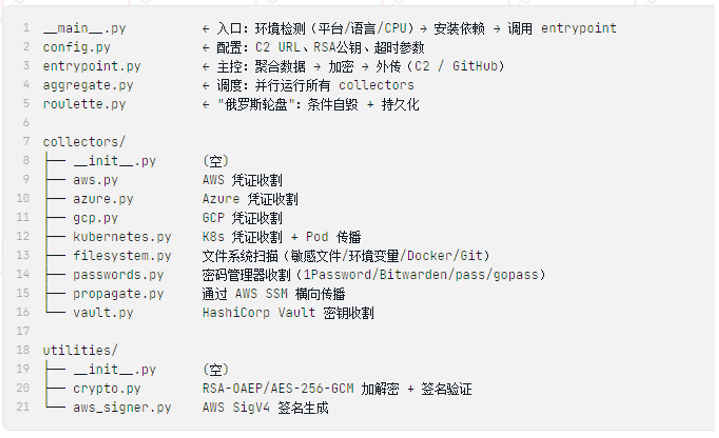
Figure 3-1 Modular Architecture of the Falsified PyPI Package Sample
(Generated by Antiy AVL Code AI Agent based on the Virus Inspection Large Language Model (VILLM))
File type: PythonZIP compression package
Test Name: Rope/Koschei (from SafeDep disclosure)
Technical Details:
- Encrypted communication: The payload is encrypted with AES-256-GCM RSA-OAEP key encapsulation. This combination ensures the confidentiality and integrity of C2 communications.
- C2 protocol: GitHubAPI is used as C2 channel (GitHubAPIC2) to issue instructions and leak data through Issue, Release or Commit of public warehouse, so that traffic is mixed into normal GitHubAPI traffic and is difficult to be identified by network detection equipment.
- Voucher collection scope:
- AWS credentials (access keys, secret keys, session tokens for all profiles)
- GCP access token (via gcloudauthprint-access-token)
- AzureIMDS endpoint metadata
- SSH private key, Docker authentication,. npmrc,. netrc
- Kubernetes Configuration, Vault Token, Terraform Credentials
- Shell History
- 30 secret regular patterns in source code (API key, database connection string, JWT, PEM private key)
- Move horizontally: Spread to up to 5 EC2 instances via AWSSSMSendCommand and up to 5 pods via Kuberneteskubectlexec.
- Persistence mechanism: Install pgsql-monitor.service(Linuxsystemd) and pgmonitor.py as the persistence daemon.
Rope/Koschei is the stage-2 payload of the durabletaskPyPI worm, delivered to the victim system as a PythonZIP packet (28KB). The payload uses AES-256-GCM encrypted communication, RSA-OAEP key encapsulation, and GitHubAPI as a C2 channel-through the public warehouse Issue, Release or Commit for instruction issuance and data leakage, so that the traffic is mixed into the normal GitHubAPI traffic.
The collection of credentials is extensive: AWS credentials (access keys, secret keys, session tokens for all profiles), GCP access tokens, AzureIMDS endpoint metadata, SSH private keys, Docker authentication,. npmrc,. netrc, Kubernetes configuration, Vault tokens, Terraform credentials, and 30 secret regex patterns in source code. The ability to move laterally includes spreading to up to 5 EC2 instances via AWSSSMSendCommand and spreading to up to 5 pods via Kuberneteskubectlexec.
3.2 @antv/li-sam-assets–npm Supply Chain Infection
Table 3-3 Counterfeit npm package sample information label
| Virus name | Worm/Script.Shulud |
| Original file name | li-sam-assets-0.3.4.tgz |
| MD5 | C5324C4ADA09288ECEBC42CFC9DB8A3F |
| File size | 21.01MB (22,031,009 bytes) |
| File format | GZIP |
| CVERC Collaborative Analysis Results | 4/ 14 |
The sample is a fake npm package in which the preinstall field in package.json is set to execute the malicious obfuscated script index.js, which is triggered when the user installs the npm package. The main function is to steal all kinds of configuration, credential information and return to the C2 server. Based on Antiy AVLCode AI analysis, the sample’s overall execution flow is as follows:
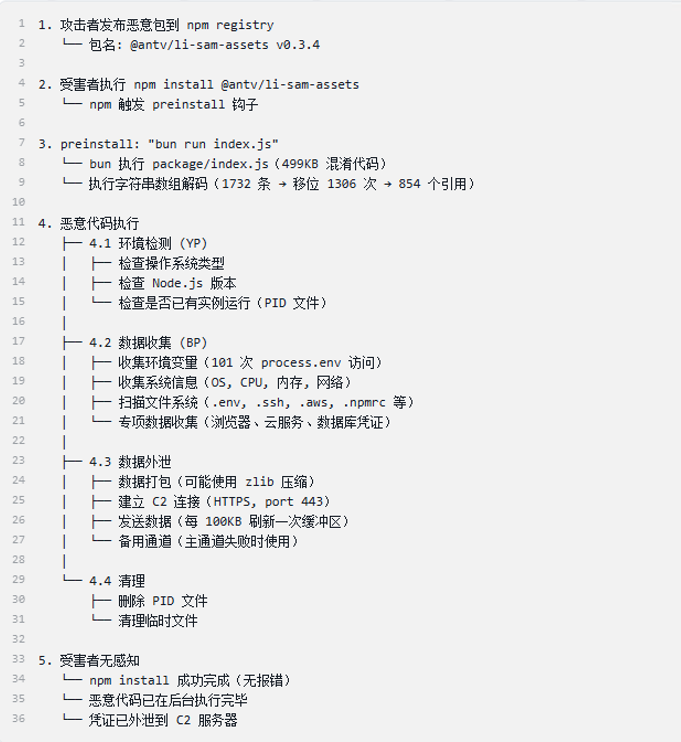
Figure 3-2 The complete attack chain of the forged npm packet attack2
(Generated by Antiy AVL Code AI Agent based on the VILLM)
File type: npm package (tgz format)Attack Vector: preinstall Hook
Technical Details:
- Infection mechanism: Automatically executed at npminstall time through preinstall scripts without user interaction. This is one of the most high-risk attack vectors in the npm ecosystem.
- Obfuscation technique: Use a custom stream cipher (CustomStreamCipher) to obfuscate the payload. The obfuscation algorithms revealed by reverse engineering include:
- PBKDF2-HMAC-SHA256 key derivation (200,000 iterations)
- Custom stream cipher based on Fisher-Yates shuffling
- Output format: Mixed IV(16 bytes) ciphertext
- Decryption requires extracting the mixed IV from the output and then recovering the original IV through SHA256 key derivation
- Credential theft targets: 20 credential types, including GitHub/CI tokens, AWS keys, GCP/Azure/Kubernetes service accounts, Vault tokens, SSH keys, Docker credentials, database connection strings
- Container escape: Attempt container escape via Docker host socket
- C2 Address: t.m-kosche.com:443/api/public/otel/v1/traces (masquerading as OpenTelemetry telemetry endpoint)
- Beacon String: niagAoGeWereH:duluH-iahS (characters reversed “Shai-Hulud:HereWeGoAgain”)
The sample is an npm package (tgz format, 22MB), which is automatically executed at npminstall time through a preinstall hook. The obfuscation technique uses a custom stream cipher: a PBKDF2-HMAC-SHA256 key derivation (200,000 iterations), a Fisher-Yates shuffle-based custom stream cipher, and the output format is mixed IV(16 bytes) ciphertext. The C2 address is disguised as a OpenTelemetry telemetry endpoint (t.m-kosche.com:443/api/public/otel/v1/tracks), and the beacon string is “Shai-Hulud:HereWeGoAgain” with reversed characters “.
3.3 MiniShai-Hulud: Self-replicating Worm
Table 3-4 Worm sample information labels
| Virus Name | Worm/Script.Shulud |
| Original File Name | ShaiHulud.zip |
| MD5 | C56E59EE44BF0D606353BDCED380166B |
| File size | 5.18MB (5,430,672 bytes) |
| File format | ZIP |
| CVERC Synergy Analysis Results | 7/ 14 |
The sample is a Node.JS worm script that has the function of collecting credentials and automatically infecting npm packages. Based on the Anity AVLCode intelligence analysis, the sample’s confusion techniques and overall process are as follows:
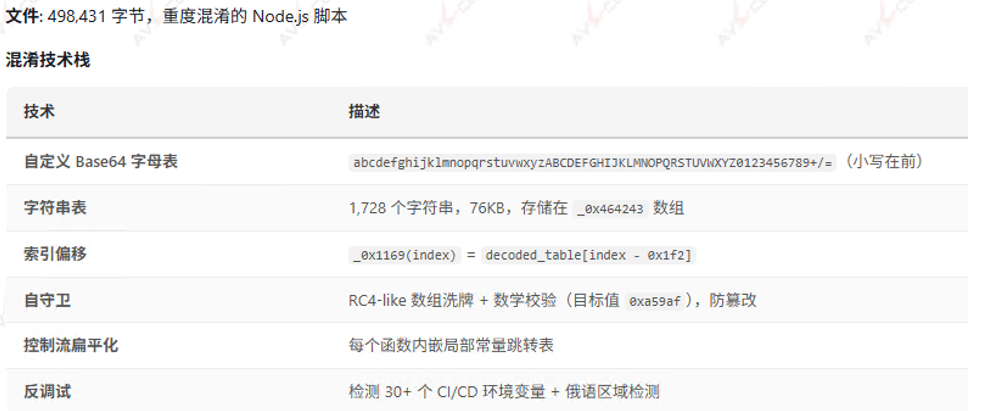
Figure 3-3 Worm Sample Obfuscation Technology Line
(Generated by Antiy AVL Code AI Agent based on the VILLM)
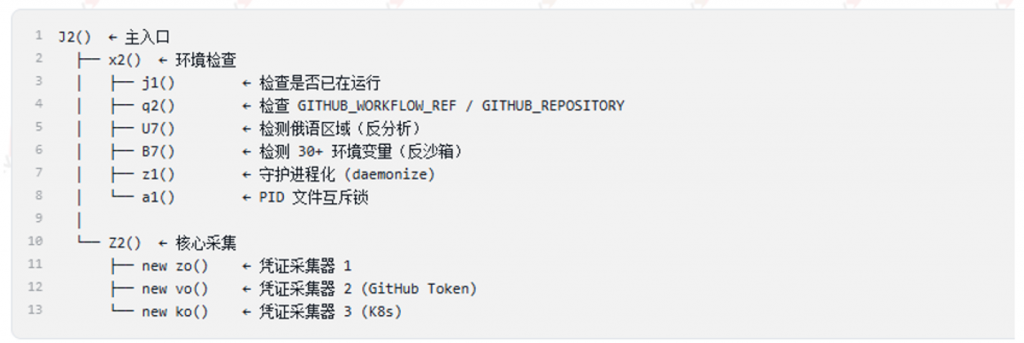
Figure 3-4 Worm sample analysis execution process
(Generated by Antiy AVL Code AI Agent based on the VILLM)
File Type: JavaScript/TypeScriptAttack Vector: TanStack Release Pipeline Break
Technical details:
- mode of transmission: self-replication-infected package will try to modify other npm packages and republish after installation
- Installing hooks: Using a prepare script (bunruntanstack_runner.js)
- Voucher Range: same as the above 20 voucher types
- Alternate leak channel: GitHub repository creation (use the format {dune-word}-{dune-word}-{0-999})
- Persistence:
- SessionStart hook for. claude/settings.json
- folderOpen tasks for. vscode/tasks.json
- Necromancer switch daemon: gh-token-monitor/kitty-monitor
- Necromancer switch mechanism: If the monitored GitHub token is revoked, the daemon will erase the victim host. This is a high-risk mechanism at the blackmail level.
The sample is propagated through a TanStack release pipeline breach, triggering execution using a prepare script (bunruntanstack_runner.js). Core features include: self-replication mechanism-infected packages will try to modify other npm packages and republish them after installation; Alternate leakage channel-create GitHub warehouse in the format of {dune-word}-{dune-word}-{0-999}; And the necromancer switch daemon (gh-token-monitor/kitty-monitor)-if the monitored GitHub token is revoked, the daemon will erase the victim host.
3.4 Two Trojan variants of Cloudware
Table 3-5 Information Label of Cloudware Variant Sample 1
| Virus name | Trojan/Python.ShaiHulud |
| Original file name | transformers.pyz |
| MD5 | C1D01AC7A9FBEBDF96C8F3023E6EC877 |
| File size | 24.58KB (25,166 bytes) |
| File format | ZIP |
| CVERC Collaborative Analysis Results | 7/ 14 |
Table 3- 6 Information Label of Cloudware Variant Sample 2
| Virus name | Trojan/Python.ShaiHuludSupplyChain |
| Original file name | transformers.pyz |
| MD5 | ED9E80087326C349FBB90F2E90C5A691 |
| File size | 24.57KB (25,164 bytes) |
| File format | ZIP |
| CVERC Collaborative Analysis Results | 8/ 14 |
The sample is a multi-stage cloud credential stealer disguised as a transformers repository, with the goal of stealing keys and sensitive information in the environment. Based on the Anity AVLCode AI analysis, the overall flow of the sample is as follows:
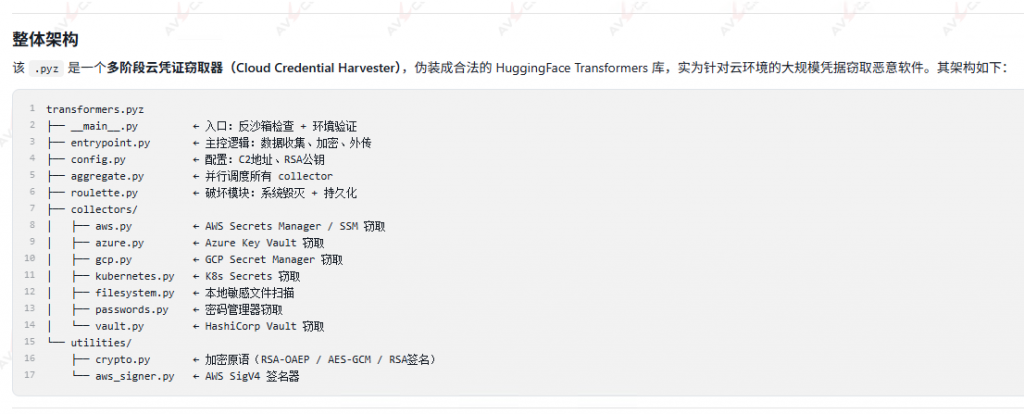
Figure 3-5 The overall architecture of the Cloudware variant sample
(Generated by Antiy AVL Code AI Agent based on the VILLM)
These two samples are Cloudware variants of the Shai-Hulud, relatively low-frequency variants among tens of thousands of captured samples, but their existence itself confirms that the attacker has an active weapon development and version control process. They share the core toolset with other variants, indicating that TeamPCP is continuously iterating its malware toolset.
4.”Sandstorm” Poisoned Corresponding Threat Framework Tactics Annotation Map
For the complete process of the Sandstorm poisoning attack, Anity combed the ATT&CK mapping map corresponding to this attack as shown in the following figure. It mainly covers 14 stages such as reconnaissance, resource development, initial access, execution, persistence, power raising, defense evasion, credential access, discovery, lateral movement, collection, command and control, data seepage, influence, etc., which embodies the key techniques and tactics of the attack organization in software supply chain poisoning, CI/CD assembly line hijacking, multi-type credential theft, container and cloud environment lateral movement, etc, it completely restores the attack link of the TeamPCP from the early resource preparation to the later credential return and system impact.
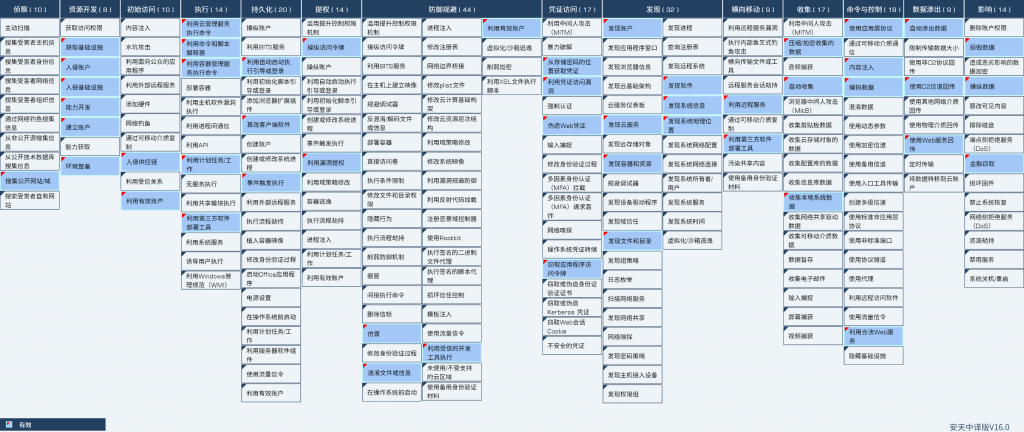
Figure 4-1 ATT&CK Tactical Label of “Sandstorm” Poisoned Attack
The “Sandstorm” poisoning attack corresponds to the specific ATT&CK technical behavior description table in the above figure, which details the specific behavior and annotation description under each ATT&CK stage and technology.
Table 4-1 Description of ATT&CK Technical Behavior of “Sandstorm” Poisoned Attack
| ATT&CK Phase/Category | Specific behavior | Comment |
| Reconnaissance | Collect public websites/domains | Collect public software packages |
| Resource development | Access to infrastructure | Registered Domain Names and Servers |
| Resource development | Intrusion account | Hacking GitHub/npm accounts |
| Resource development | Intrusion infrastructure | Break the CI/CD pipeline |
| Resource development | Capacity development | Developing malicious code |
| Resource development | Create an account | Create fake accounts like DeadCatx3 |
| Resource development | Environmental Readiness | Configure C2 infrastructure |
| Initial visit | Invasion of supply chain | npm/PyPI/Github Supply Chain Poison |
| Initial Access | Utilize an effective account | Using stolen tokens and keys |
| Execute | Execute commands with cloud management services | Move laterally with AWS SSM |
| Execute | Leverage the Command and Script Interpreter | Pre-execution hook to execute malicious script |
| Execute | Use Container Management Service to execute commands | Diffuse to Pod through kubectl exec |
| Execute | Utilize scheduled tasks/work | Triggered via GitHub Actions |
| Execute | Using third-party software deployment tools | Hijack the CI/CD pipeline |
| Persistence | Boot or login with automatic start | Install systemd Services |
| Persistence | Tampering with client software | Infecting. claude and. vscode configurations |
| Persistence | event-triggered execution | Use hook to trigger execution |
| Exposition of authority | Manipulating access tokens | Extract OIDC token from/proc/mem |
| Privilege escalation | Exploit vulnerability to raise rights | Exploitation of GitHub Platform CI/CD Vulnerabilities |
| Defensive Evasion | Counterfeit | Forged Submitted Author |
| Defense evasion | Obfuscating files or information | Code obfuscation |
| Defense evasion | Execute with trusted development tools | Leverage official toolchains such as npm/pip |
| Defense evasion | Using a valid account | Using stolen tokens and keys |
| Credential Access | Get credentials from where passwords are stored | Stealing credentials from software configuration |
| Credential access | Exploit Credential Access Vulnerability | Exploit GitHub Token Extraction Vulnerability |
| Credential access | Forged Web Credentials | Generate SLSA Build Level 3 Proof |
| Credential access | Stealing application access tokens | Stealing tokens and keys |
| Discovery | Discovery Account | Enumerate GitHub repository members |
| Discovery | Discover Cloud Services | Enumerate cloud services and API endpoints |
| Discovery | Discover containers and resources | Enumeration Kubernetes |
| Discovery | Discover files and directories | Scan the file system for credential files |
| Discovery | Discover Software | Instrumentable development tools and cloud CLI |
| Discovery | Discover system information | Collect basic system information |
| Discovery | Discovery system geographic location | Detection system language and other geographic information |
| Move laterally | Leverage remote services | Leverage remote management services |
| Lateral movement | Leverage third-party software deployment tools | Using kubectl exec |
| Collect | Compress/encrypt collected data | Compress/encrypt the collected data |
| Collect | Automatic collection | Automatically collect multiple credentials |
| Collect | Collecting Local System Data | Collect local system data |
| command and control | Use application layer protocols | Use the HTTPS protocol |
| Command and Control | Content Injection | Use Github comments, etc. |
| Command and Control | Encoded Data | base64 encoding payload |
| Command and Control | Leverage legitimate web services | Control with GitHub |
| Data bleed | Automatic exudation data | Automatic data extraction |
| Data leakage | Use C2 channel for backhaul | Use C2 channel for backhaul |
| Data leakage | Using Web Service Backpass | Use GitHub to send back |
| Impact | corrupt data | Switch triggers data deletion |
| Impact | Manipulating Data | Inject malicious code |
| Impact | Financial theft | Purse theft |
5.Sample Association and Capability Diffusion Verification
5.1 Directly Relevant Evidence
Through the CHANGELOGv3.4.2 disclosed by the SafeDep, the following key associations are confirmed: the stage-2 payload rope.pyz of the durabletaskPyPI worm (v1.4.1-1.4.3) is the sample rope; The secondary C2 t.m-kosche.com is used in durabletask worms and MiniShai-HuludAntV waves at the same time. Slavic folklore beacon FIRESCALE, BABA-YAGA-KOSCHEI, etc. appear in the submission message and leakage warehouse of durabletask worms.
5.2 Sample Association Matrix
| Sample A | Sample B | Affiliation |
| 04750ABA368EEB2890E74D10FA0A50A3 Rope | EF0EB6DCF4A8E97814A3E975B72B0D12 durabletaskPyPI | stage-2payload relations |
| EF0EB6DCF4A8E97814A3E975B72B0D12 durabletaskPyPI | C5324C4ADA09288ECEBC42CFC9DB8A3F AntV | Share C2:t.m-kosche.com |
| C5324C4ADA09288ECEBC42CFC9DB8A3F AntV | C56E59EE44BF0D606353BDCED380166B Mini | Shared C2: t.m-kosche.com |
| C56E59EE44BF0D606353BDCED380166B Mini | C1D01AC7A9FBEBDF96C8F3023E6EC877 Cloudv1 | Toolset Overlap |
| C1D01AC7A9FBEBDF96C8F3023E6EC877 Cloudv1 | ED9E80087326C349FBB90F2E90C5A691 Cloudv2 | Cloudware variant relationship |
5.3 Capability Diffusion Verification
The timeline from open source to actual weaponization verifies the effectiveness of capability diffusion. On May 12, the day the source code was made public, the BreachForums reward competition was launched simultaneously. Six days later (May 18) Megalodon action broke out. Seven days later (May 19) AntV/atool waves and durabletaskPyPI worms appeared at the same time. Web3/DeFiMCP fishing 8 days later; Nine days later, Polymarket wallet theft. Five waves of attacks broke out in six days, indicating that a third party quickly integrated the source code into its own attack tool chain after it was made public. Of the thousands of relevant samples captured by Anity, most of them are the products of this wave’s ability to spread.
| Date | Incident | Open source |
| 2026-05-12 | Shai-Hulud source code is publicly available (MIT License) | T+ 0 |
| 2026-05-12 | BreachForums is offering a $1,000 reward. | T+ 0 |
| 2026-05-18 | Megalodon operations (5,561 warehouses) | T+ 6 days |
| 2026-05-19 | AntV/atool wave (643 version) | T+ 7 days |
| 2026-05-19 | durabletask PyPI worm | T+ 7 days |
| 2026-05-20 | Web3/DeFiMCP Fishing | T+ 8 days |
| 2026-05-21 | Polymarket wallet theft | T+ 9 days |
6.TeamPCP: Multidimensional Clue–Driven Attribution Analysis and Threat Localization
TeamPCP is a typical composite high-risk threat organization that emerged from 2025 to 2026. It combines the refined operation capability of the advanced threat team with the large-scale profit-making characteristics of black and gray production. The organization’s attack link is complete, anti-traceability capability is mature, cross-gang linkage is frequent, resulting in scattered public traceability clues, interference characteristics, the industry has not yet formed a unified attribution conclusion. Based on the monitoring data of several security vendors, the current effective traceability clues are mainly divided into three categories: social behavior traces, C2 infrastructure life cycle, and cross-gang collaboration mode. Compared with the random characteristics of ordinary black ash production, the overall behavior of the TeamPCP is highly regular and can be continuously captured by intelligence, accompanied by a large number of human interference traces. This section studies the technical value, credibility level and traceability limitations of each clue from the perspective of the manufacturer’s actual combat.
6.1 Regional Behavioral Traces: Correlation Features and Interference Analysis in Kenya
Flare.io social intelligence monitoring shows that the TeamPCP mainly relies on the Telegram community to carry out operations, campaigns and data transactions. The organization’s core account frequently mentions political, social, and government-enterprise-related topics in Africa and Kenya in long-term community exchanges, attack announcements, and data sales announcements, forming significant regional discourse characteristics. Combined with the timing of its core GitHub asset DeadCatx3 activities, the account has been continuously updating penetration tools and exploit scripts since the end of 2025, which is highly consistent with the TeamPCP attack initiation cycle, forming a correlation clue of “social geographic characteristics core asset timing.
In the traceability system, social regional traces belong to weak correlation clues and do not have the effect of attribution. Mature high-risk groups generally have the ability of regional camouflage, which can forge territorial characteristics through speech simulation, agent nodes and targeted topic operation to interfere with traceability judgment. Combined with the overall level of confrontation in TeamPCP, there is a high probability of artificial forgery of the current Kenyan association traces, which can only be used as a behavioral reference and cannot be used as a basis for organizational attribution.
6.2 Infrastructure Characteristics: Specialized Operational Features Characterized by Pre‑deployment Dormancy and Delayed Activation.
Hunt.io infrastructure traceability captures the TeamPCP’s most identifiable advanced threat characteristics, which is also the core basis for manufacturers to distinguish between ordinary black and gray products and professional threat teams. Ordinary profit-making groups mostly adopt the opportunistic model of instant registration, instant use and disposal, with short infrastructure life cycle, random deployment and no pre-planning. And TeamPCP presents a standardized, highly controllable infrastructure operation paradigm.
Monitoring data show that the TeamPCP core C2 subnet 83.142.209.0/24 will complete full link deployment in November 2025, including a full set of pre-work such as domain name configuration, port debugging, malicious program mounting, terminal permission control, etc. After the asset deployment is completed, it will enter a four-month silent hibernation period, with no attack traffic, no manipulation behavior and no data transmission until it is officially activated and put into batch attack in March 2026.
This preset dormant and delayed activation operation mode is direct evidence of team specialization, combat systematization, and attack prepositioning. It is completely different from random attacks by individual attackers and temporary gangs. The characteristics show that the TeamPCP has the ability of stable team division, long-term combat planning and mature infrastructure operation and maintenance, and belongs to the typical organized and sustainable high-risk threat subject.
6.3 Ecological Collaboration Characteristics: A Hybrid Threat Architecture That Integrates Resources Across Criminal Groups
TeamPCP uses a rare hybrid threat architecture, with advanced autonomous penetration capabilities and mature black and gray production ecological integration capabilities. The organization can independently complete the full-link attack processes such as vulnerability exploitation, directional penetration, intranet horizontal, data theft and encryption and blackmail, and at the same time deeply access the global underground crime industry chain to build a stable cross-group collaboration network.
At present, the head threat subjects that have verified their long-term cooperation include: Vect ransomware team, Lapsus $data leakage organization, BreachForums underground transaction forum, ShinyHunters data theft group. The parties achieve in-depth collaboration through technology sharing, resource exchange, revenue sharing and exchange of trading channels, effectively complementing the shortcomings of capabilities and significantly improving the scale of attacks and profit-making efficiency. Its large-scale ecological linkage has dual functions: at the business level, relying on mature underground industrial chains to reduce attack costs and quickly realize large-scale blackmail and data realization; At the confrontation level, the cross-binding of multi-gang, multi-channel and multi-characteristics effectively confuses one’s own behavioral fingerprints and raises the difficulty of traceability clustering and subject locking for security manufacturers, which is a typical advanced confrontation operation strategy. This broad integration of criminal networks both maximizes economic gains and constructs noise for the purpose of traceable attribution.
6.4 Comprehensive assessment
Based on the three clues of regional traces, infrastructure operation and ecological linkage, and combined with the actual combat research and judgment experience of manufacturers, the portrait of TeamPCP organization can be clearly defined: it is not an individual attacker or a temporary small group, but a professional compound threat team with high-level technical ability, mature confrontation thinking, complete ecological link and long-term operation planning. The risk of forgery of geographical association clues is high and the attribution effect is weak. Infrastructure preset dormancy and cross-gang ecological integration are highly credible and strong features, which can truly reflect its team level and combat capability. TeamPCP takes commercial profit as its core demand, pays great attention to covert confrontation, and continuously avoids traceability and interception through multiple camouflage and resource integration. It is a persistent high-risk threat organization that needs long-term key monitoring at this stage.
7.Summary
TeamPCP is an emerging high-risk attack organization that has been officially active since the end of 2025 and quickly poses a huge threat to the global software supply chain in the short term. The gang targeted the GitHub Actions, npm, CI/CD pipeline, cloud development environment and other mainstream developer ecosystems, and continued to carry out systematic and large-scale network intrusion and software poisoning operations. Because its attack link is deeply embedded in the whole process of software development, package distribution, code calling, etc., every node that is broken through by it will continue to spread downstream with the normal business flow such as software distribution and program calling, eventually forming a chain conduction, continuous diffusion of the global threat effect. The organization’s core crime objectives are very clear. It takes the developer tool supply chain as the main entrance and steals all kinds of high-value identity credentials. It focuses on plundering core authentication information such as GitHub platform account, cloud service authority, identity token Token, SA account number, API key, etc. It controls horizontal movement portals for cloud native and container environments in batches. It is a professional threat actors focusing on illegally obtaining “credential assets” as the core objective.
Back to traditional software supply chain attacks, mainstream threat organizations generally adopt the operational thinking of targeted strikes, long-term latency, and covert penetration, striving to reduce exposure and prolong the survival time of attacks. And TeamPCP completely subverts this inherent model, innovation to create a unique “sandstorm” attack paradigm. The organization no longer pursues the concealment of single-point breakthrough, but instead launches a full-scale coverage attack, and attempts to enter various safety cracks in the ecosystem through mass poisoning, so as to seize the profits of black production on a large scale. In terms of tactical choice, the gang completely ignored the hidden life cycle of the attack node and acted in a very high-profile style. It not only actively disclosed the source code of malicious programs, but also expanded the attack team and broadened the crime boundary by issuing reward tasks and other means. At the same time, it deliberately created a large amount of interference information, greatly increasing the tracking difficulty of security manufacturers and traceability teams.
The attack mode can be landed and quickly fermented, which is closely related to the changes of the overall network environment in the AI era. At present, the exposure of global network attacks continues to expand. The global developer ecology has long relied on the trust mechanism to form an upstream and downstream division of labor and cooperation mode. The business linkage between various subjects is efficient and frequent. This inherent operation characteristic of the industry has also become a security short board that the entire IT system is difficult to avoid. At the same time, generative artificial intelligence has become an important help for TeamPCP to improve attack efficiency. The organization uses AI capabilities to assist in malicious code writing, function iteration and other work. From top-level attack strategy planning, anti-traceability technology landing, to various traceability interference content structures, all links rely on AI to complete sorting, design and optimization, making the attack system more mature and efficient.
TeamPCP has long gone beyond the scope of a single attack team. It has transformed its intrusion capability into a pool of dynamic credential resources that can be circulated, reused, traded and rented. It has actively carried out cross-border cooperation with blackmail gangs and various black and gray production forces, and has gradually grown into an upstream threat ecology in the black and gray industry. When the attack model forms a closed loop of revenue with strong demonstration effect and cyclical growth, its attack activity enters a high-speed expansion phase. Following the RaaS and FaaS attack modes, the sandstorm supply chain poisoning launched by TeamPCP has become another new threat with paradigm-level impact in the field of network security, and has also brought unprecedented challenges to the security protection of global software supply chain.
[Note]: The analysis work in this report is based on the Anity AVL Code AI Agent, which is connected to the results generated by the VILLM and is referenced in the form of screenshots. The text content generated by the VILLM in the report has been manually reviewed and proofread, which is hereby explained.
Appendix A: List of IoCs in the Sample Report
| Type | Value |
| Hash | ED9E80087326C349FBB90F2E90C5A691 |
| Hash | C1D01AC7A9FBEBDF96C8F3023E6EC877 |
| Hash | C56E59EE44BF0D606353BDCED380166B |
| Hash | C5324C4ADA09288ECEBC42CFC9DB8A3F |
| Hash | 04750ABA368EEB2890E74D10FA0A50A3 |
| C2 Domain Names | t.m-kosche.com |
| C2 domain name | check.git-service.com |
| IP | 83.142.209.194 |
Note: The number of samples of npm, PyPI and other open source software packages affected by this supply chain poisoning is large, and this article is not enumerated one by one due to space limitations. For a complete list of affected packages and detailed sample data, please contact Anity CERT(cert@antiy.cn).
Appendix B: References
[1] Cloud Security Alliance – Shai-Hulud/Megalodon: A Two-Wave AI Developer Supply Chain Attack (2026-05-23).
Shai-Hulud/Megalodon: A Two-Wave AI Developer Supply Chain Attack
[2] SafeDep – Megalodon: Mass GitHub Repo Backdooring via CI Workflows (2026-05-18). https://safedep.io/megalodon-mass-github-repo-backdooring-ci-workflows
[3] SafeDep – Mini Shai-Hulud Strikes Again (2026-05-19).
https://safedep.io/mini-shai-hulud-strikes-again
[4] SafeDep – Malicious durabletask PyPI Supply Chain Attack (2026-05-20).
https://safedep.io/malicious-durabletask-pypi-supply-chain-attack
[5] Palo Alto Networks Unit 42 – The npm Threat Landscape (Updated 2026-05-21). https://unit42.paloaltonetworks.com/monitoring-npm-supply-chain-attacks/
[6] OX Security – The @antv Ecosystem Was Compromised (2026-05-20).
[7] Microsoft Security Blog – Mini Shai Hulud: Compromised @antv npm packages (2026-05-21). https://www.microsoft.com/en-us/security/blog/2026/05/20/mini-shai-hulud-compromised-antv-npm-packages-enable-ci-cd-credential-theft/
[8] Vectra.ai – Shai-Hulud Part 2: When the Worm Forged Its Own Security Certificate (2026-05-13). https://www.vectra.ai/blog/shai-hulud-part-2-when-the-worm-forged-its-own-security-certificate
[9] Tenable – Mini Shai-Hulud Supply Chain Attack CVE-2026-45321 FAQ (2026-05-22). https://www.tenable.com/blog/mini-shai-hulud-frequently-asked-questions
[10] Hackread – 5,561 GitHub Repositories Hit by Megalodon Supply Chain Attack (2026-05-23). https://hackread.com/github-repositories-megalodon-supply-chain-attack/
[11] Infosecurity Magazine – GitHub Confirms Breach of Internal Repositories (2026-05-21). https://www.infosecurity-magazine.com/news/github-confirms-breach-vs-code/
[12] Socket.dev – TeamPCP and BreachForums Launch $1,000 Contest (2026-05-14). https://socket.dev/blog/teampcp-supply-chain-attack-contest
[13] Help Net Security – TeamPCP breached GitHub’s internal codebase (2026-05-21). https://www.helpnetsecurity.com/2026/05/20/github-breached-teampcp/
[14] ThreatAft – TeamPCP Open-Sources Shai-Hulud Worm on GitHub (2026-05-13). https://threataft.com/articles/teampcp-shai-hulud-open-source-github-supply-chain-attack
[15] The Register – Malware crew TeamPCP open-sources its Shai-Hulud worm (2026-05-13). https://www.theregister.com/security/2026/05/13/malware-crew-teampcp-open-sources-its-shai-hulud-worm-on-github/5239319
[16] StepSecurity – Shai-Hulud Here We Go Again (2026-05-19).
https://blog.stepsecurity.io/shai-hulud-here-we-go-again/
[17] Endor Labs – Trojanized Microsoft SDK: durabletask 1.4.1-1.4.3 (2026-05-20). https://www.endorlabs.com/learn/trojanized-microsoft-sdk-durabletask-1-4-1-through-1-4-3-deliver-credential-stealing-malware
[18] Phoenix Security – TeamPCP Wave Four: GitHub Breach via Poisoned VS Code Extension (2026-05-21). https://phoenix.security/teampcp-github-breach-durabletask-pypi-supply-chain-wave-four-2026/
[19] Cobenian/shai-hulud-detect – Open Source Detection Tool.
https://github.com/Cobenian/shai-hulud-detect
[20] National Computer Virus Collaborative Analysis Platform. https://virus.cverc.org.cn/